Wind-Rated Pergolas: What Texas Homeowners Need to Know
Texas weather doesn’t play by the rules. One afternoon you’re grilling under a clear sky, and by evening a fast-moving storm has turned your backyard into a wind tunnel. For DFW and Austin homeowners thinking about adding a pergola, that reality raises an important question: can your outdoor structure handle what Texas throws at it?
The answer depends entirely on the materials, engineering, and installation method behind the build. Here’s what you need to know before you invest.
Why Wind Rating Matters in Texas
North Texas and Central Texas sit in a high-wind corridor. The DFW Metroplex regularly sees thunderstorm gusts of 50–70 mph, and the plains north toward Southern Oklahoma experience even more open-exposure wind loads. Standard big-box pergola kits — built from cedar, pine, or lightweight steel — aren’t engineered for those conditions. They’re designed to look good on the showroom floor, not to survive a severe thunderstorm.
A wind-rated pergola is specifically engineered to meet or exceed local building code wind speed requirements. In Texas, most municipalities adopt the International Building Code (IBC) or International Residential Code (IRC), which define design wind speeds based on geographic risk. Many DFW-area jurisdictions require outdoor structures to withstand design wind speeds of 90–115 mph.
What Makes an Aluminum Pergola More Wind-Resistant
Not all pergolas handle wind equally. The structural differences come down to four key factors:
1. Frame material. Commercial-grade aluminum is significantly more resistant to wind damage than wood or light-gauge steel. Wood absorbs moisture and weakens over time — the same storms that stress your pergola also accelerate rot and cracking. Aluminum maintains its structural integrity season after season without warping, swelling, or corroding.
2. Post anchoring system. A pergola that sits on surface footings or relies on weight alone is an accident waiting to happen in a Texas storm. Properly installed aluminum pergolas use engineered post base anchors bolted to concrete footings, providing genuine resistance to uplift and lateral wind loads. The anchor spec matters as much as the frame itself.
3. Roof panel design. Open-slat and louvered roof systems actually have an advantage over solid roofs in high-wind scenarios. A solid roof catches wind like a sail — the structure has to resist the full load. A louvered or open-slat system allows wind to pass through, dramatically reducing the force the frame must absorb. For motorized systems, closing the louvers during a storm creates a tight seal that also sheds water cleanly.
4. Fastener and connection engineering. Amateur builds often rely on standard wood screws or undersized hardware. A wind-rated structure uses engineered connection hardware — structural screws, through-bolts, and post caps rated for the load calculations specific to your structure size and location.
Louvered Pergolas: Built for Texas Weather
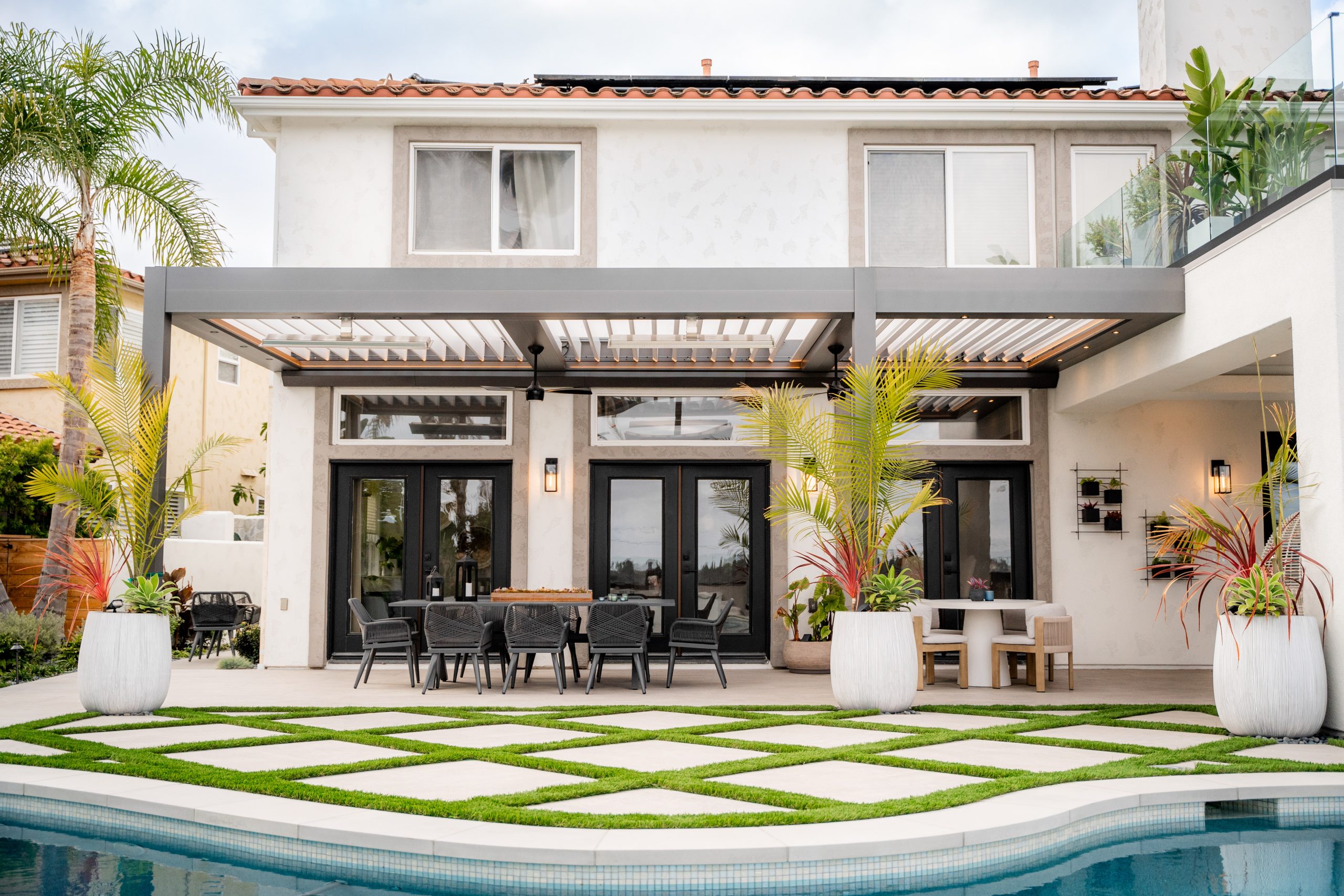
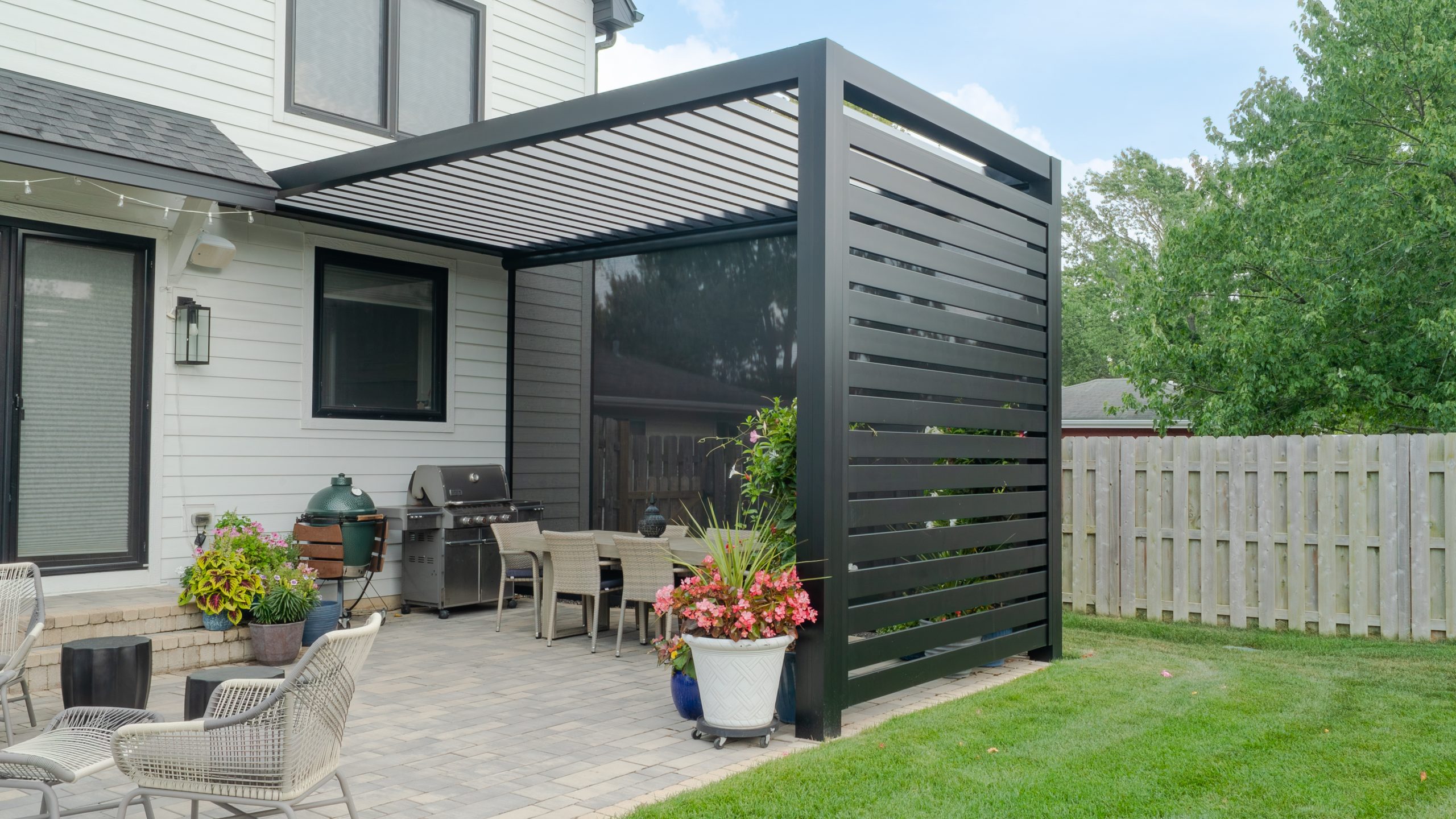
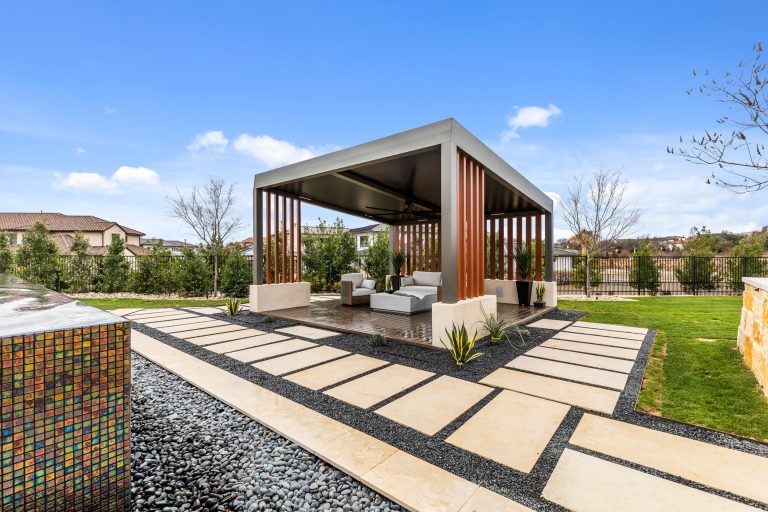
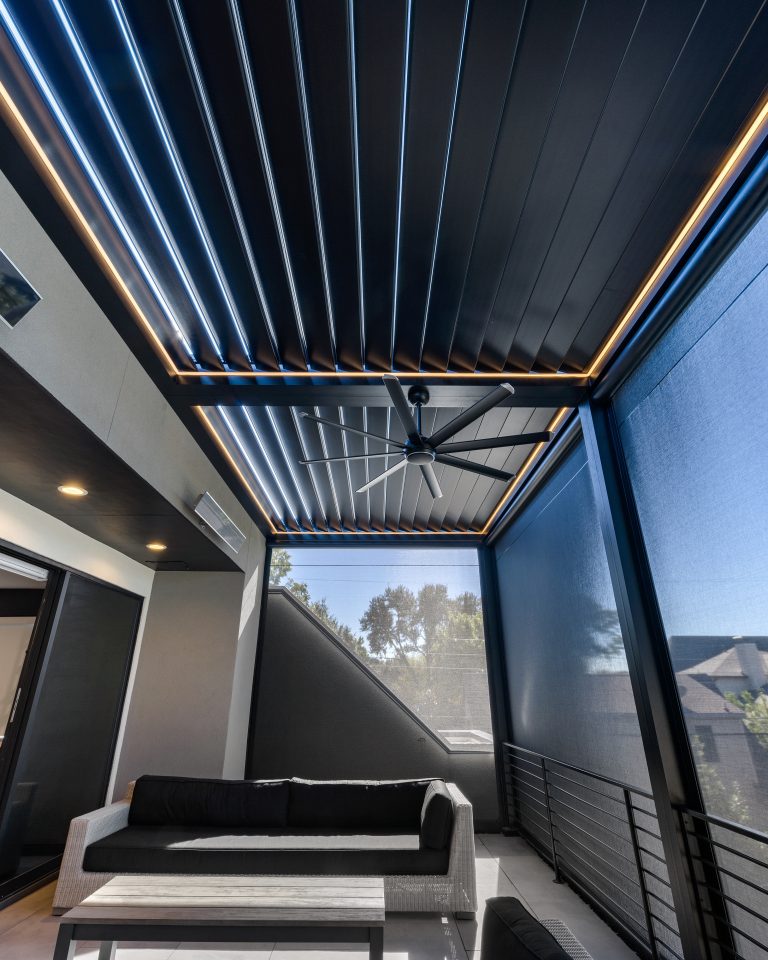
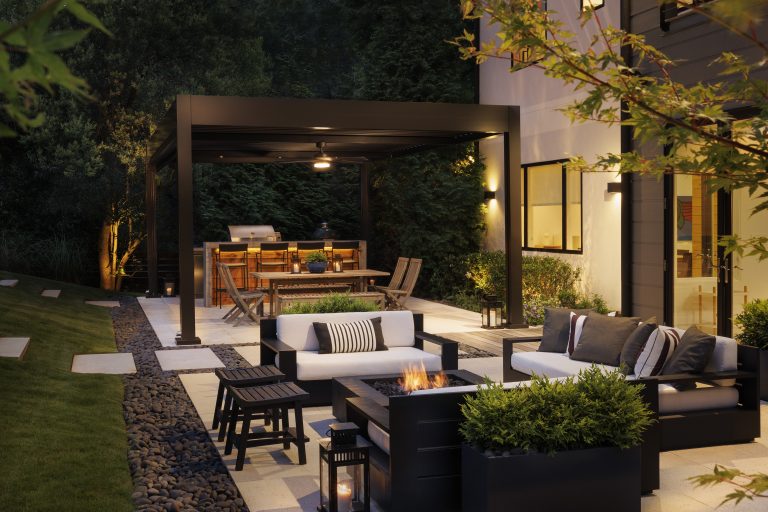
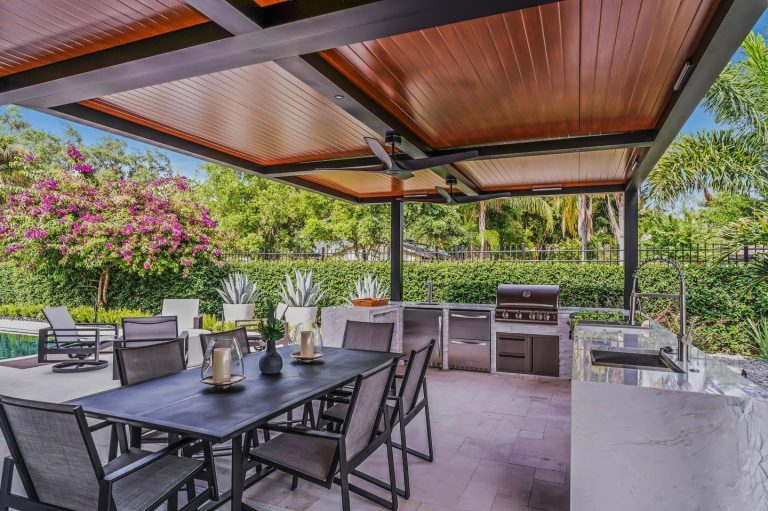
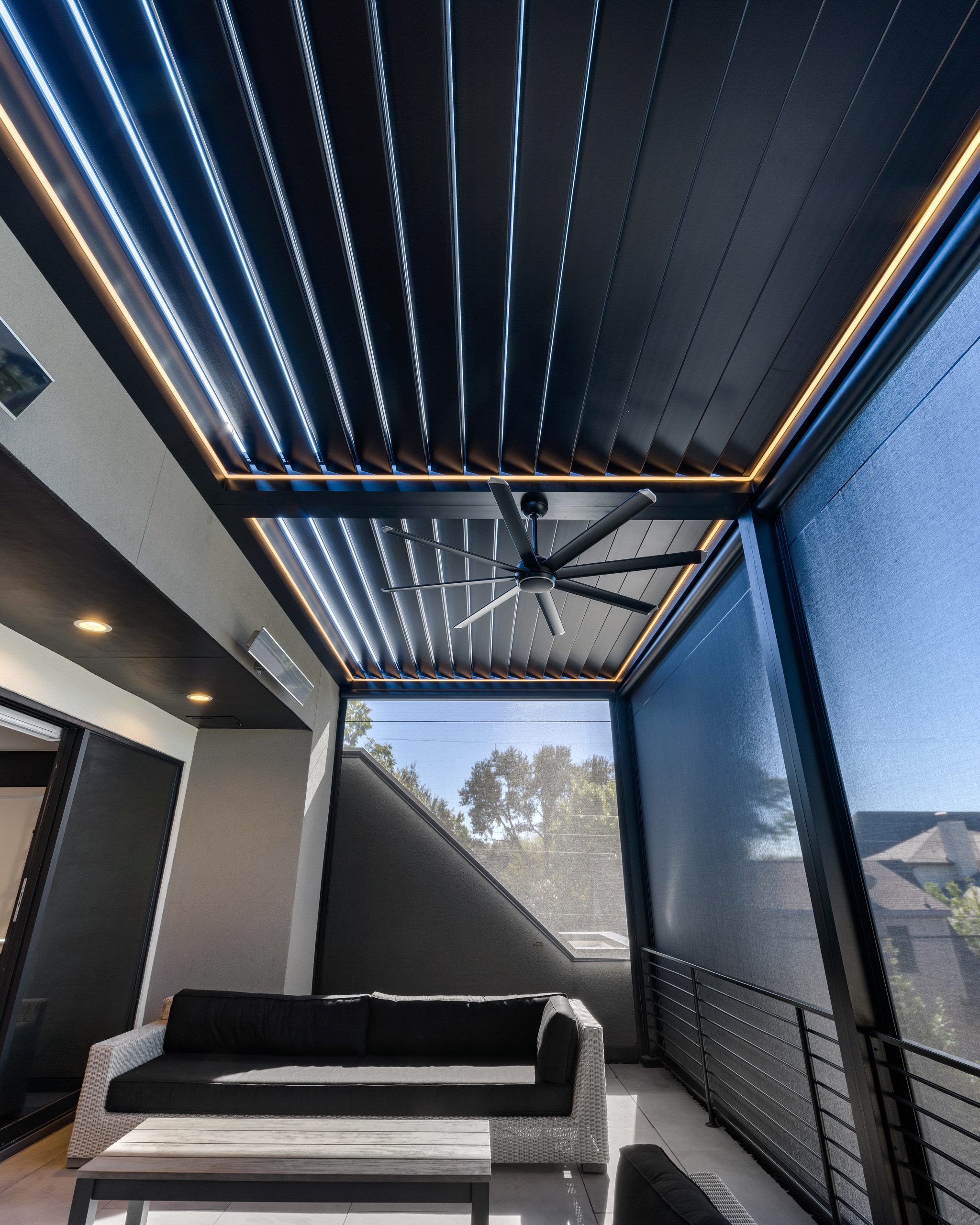
If wind resistance is a priority — and in Texas it should be — a motorized louvered pergola deserves serious consideration. These systems are built from extruded aluminum profiles engineered to specific load ratings. When louvers are open, wind passes through. When they’re closed, the interlocking blades create a weather-tight seal that handles both rain and significant wind loads.
The aluminum frame systems we install are rated for high-wind environments and come with engineered drawings that satisfy most permit requirements. That matters when your city inspector asks for documentation — and it matters more when a storm rolls through and you need the structure to hold.
Do You Need a Permit for a Pergola in Texas?
In most DFW and Austin-area municipalities, yes — any permanent outdoor structure attached to your home or exceeding a minimum square footage requires a building permit. The permit process typically requires a site plan, structural drawings, and wind load calculations. Homeowners who try to skip the permit process often discover the problem the hard way: when they go to sell the home and the structure shows up as unpermitted in the inspection, or when an insurance claim is denied after storm damage to an unpermitted structure.
Working with a professional installer who provides engineered drawings and pulls the permit for you isn’t optional — it’s how you protect the investment.
Solid Patio Covers vs. Open Pergolas in Wind
Some Texas homeowners opt for a solid aluminum patio cover rather than an open pergola. Solid patio covers offer complete rain protection and a sealed overhead space, but they require more robust structural engineering to handle wind uplift — especially on spans over 12 feet. The right choice depends on your specific site conditions, how exposed your backyard is to prevailing winds, and what kind of coverage you need year-round.
Our team assesses each site individually before recommending a structure type. An installation that works perfectly for a courtyard in Southlake may need different engineering for an exposed backyard in Denton or a hillside lot in Austin.
Frequently Asked Questions: Wind-Rated Pergolas in Texas
What wind speed should a pergola be rated for in DFW?
Most DFW municipalities require outdoor structures to meet design wind speeds of 90–115 mph under the International Building Code. The exact requirement depends on your city and whether the structure is attached to your home. A permitted installation includes engineering calculations specific to your jurisdiction.
Are aluminum pergolas more wind-resistant than wood?
Yes. Commercial-grade aluminum doesn’t warp, rot, or weaken from moisture exposure. Wood pergolas — especially those made from cedar or pine — are significantly more vulnerable to the combination of wind stress and Texas humidity over time. Aluminum maintains its structural integrity without ongoing maintenance.
Do louvered pergolas hold up in storms?
Well-engineered louvered pergola systems handle Texas storms very well. When louvers are open, wind passes through with minimal resistance. When closed, the interlocking aluminum blades create a weather-tight surface. The key is the quality of the frame engineering and post anchoring — not all louvered systems are created equal.
Do I need a permit for a pergola in Texas?
In most DFW and Austin-area cities, yes. Permanent outdoor structures — especially those attached to the home or over a certain square footage — require a building permit with engineered drawings and wind load calculations. Skipping the permit can create issues at resale and may affect insurance claims after storm damage.
Can Cabana Theory pull permits for a pergola installation in DFW or Austin?
Yes. We handle the permitting process as part of our standard installation service in most jurisdictions across DFW, Austin, and Southern Oklahoma. We provide engineered drawings and handle submittal so you don’t have to navigate city requirements on your own.
Ready to Build a Pergola That Can Handle Texas?
Our team designs and installs wind-rated aluminum pergolas, louvered roof systems, and patio covers across DFW, Austin, and Southern Oklahoma. Get a free quote and let us assess your site.
Get Your Free QuoteReady to Transform Your Outdoor Space?
Keep Reading