What Affects the Cost of a Pergola or Patio Cover in Texas?
If you’ve searched for pergola or patio cover pricing online, you’ve probably found a wide range of numbers with very little explanation for why they vary. That’s because outdoor structure cost is genuinely project-specific — driven by a combination of factors that are unique to your space, your goals, and the structure itself. Understanding what drives cost helps you ask the right questions and evaluate quotes accurately.
1. Structure Size and Span
The most direct cost driver is the footprint of the structure. Larger spans require heavier-gauge framing members, more material overall, and more complex engineering. A small attached pergola over a dining area costs considerably less than a freestanding structure spanning a full backyard or a large commercial shade system over a pool deck. Width matters too — wider spans between support posts require deeper beams to carry the load, which adds both material cost and fabrication complexity.
2. Structure Type and Complexity
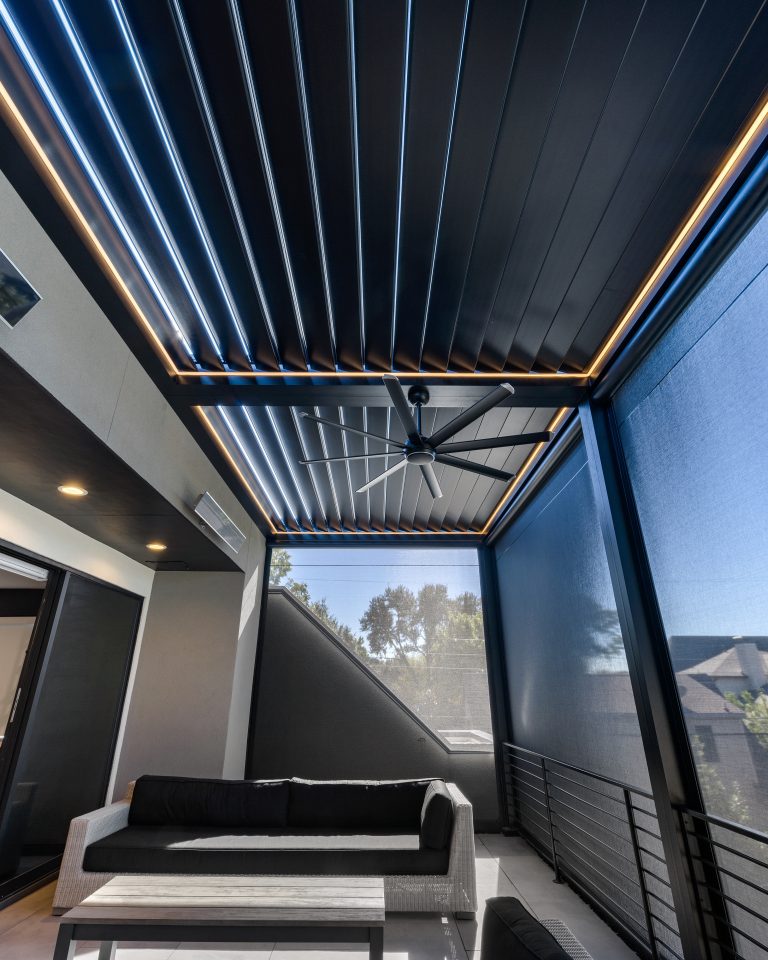
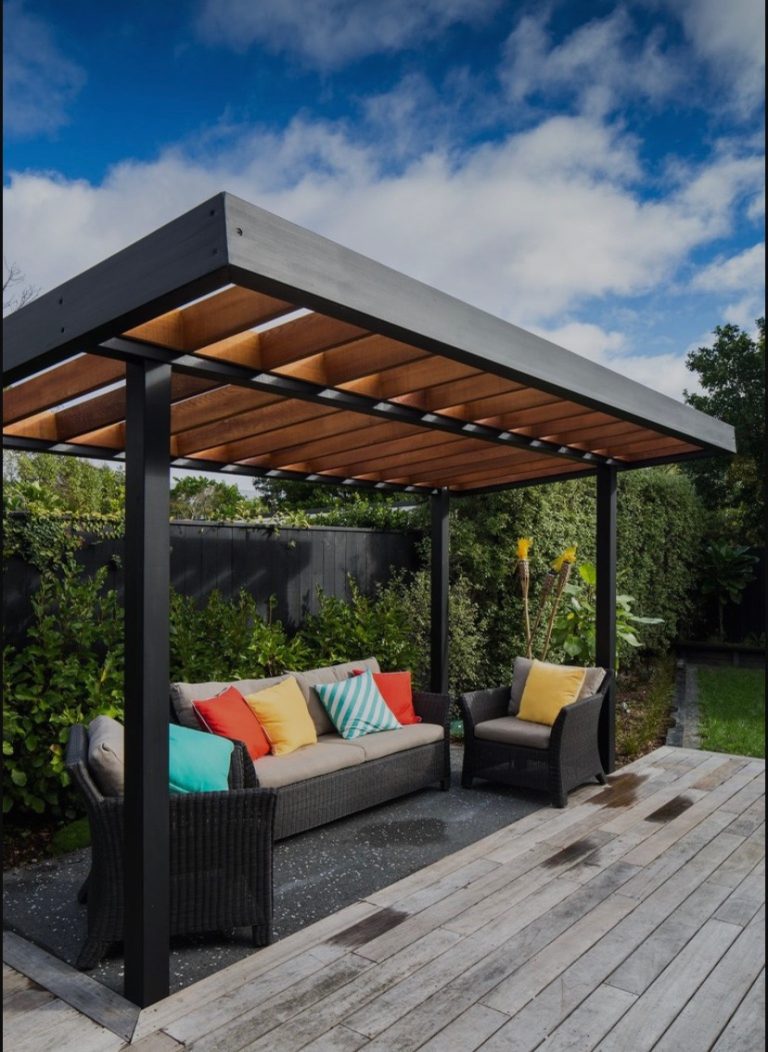
A fixed slat pergola and a motorized louvered roof pergola serve different purposes — and are priced differently. Motorized systems include the mechanical components, control electronics, and precision fabrication required to make the louvered roof open and close reliably for decades. A solid patio cover is structurally simpler than a motorized louvered pergola, which in turn differs from a cantilevered shade structure that must distribute load without a front post. The more mechanical and structural complexity, the higher the investment.
3. Material and Finish Selection
Cabana Theory builds exclusively in commercial-grade aluminum because it delivers the best strength-to-weight ratio and the longest service life in Texas weather conditions. Within that, finish selection affects cost. Standard powder coat colors differ from custom color matches. Anodized finishes, specialty textures, or multi-tone configurations add to fabrication time and material cost. Accessories like integrated lighting, ceiling fans, guttering systems, or motorized privacy screens are add-ons that stack onto the base structure cost.
4. Attachment vs. Freestanding
Attached structures connect directly to your home and transfer some load to the existing structure — which requires careful assessment of the attachment point and may involve reinforcement work. Freestanding structures must be entirely self-supporting, which means a full perimeter post system and foundation work. Neither is inherently more expensive, but freestanding structures in windy locations or on challenging soil types may require deeper footings or additional engineering.
5. Location and Project Logistics
Cabana Theory serves DFW, the Austin metro, and Southern Oklahoma. Every installation is handled by our own trained crews — not subcontractors. That matters for quality and accountability, and it’s a factor in how we price work across our service area. Where your project is located affects how we schedule and staff it, which factors into the overall cost.
Why You Need a Real Estimate
Online pricing guides and per-square-foot averages are useful for ballpark context, but they won’t tell you what your project actually costs. The only way to get an accurate number is a site visit — where we can measure your space, evaluate site conditions, understand what you’re trying to accomplish, and build a proposal around your actual project. There are no hidden fees in a Cabana Theory estimate. Every line item is transparent, and we’re happy to walk through the scope with you in detail before you sign anything.
READY TO TRANSFORM YOUR OUTDOOR SPACE?
Tell us about your project and we’ll put together a free custom estimate — no obligation.