How to Choose a Shade Structure for Your Commercial Patio in DFW and Austin
Your commercial patio is one of the most valuable assets your business has. Whether it’s a restaurant terrace in Uptown Dallas, a resort pool deck in the Austin Hill Country, or a multi-family amenity area in Frisco, the right shade structure keeps guests comfortable, extends usable hours, and signals that your property takes outdoor living seriously.
But not all shade solutions are equal — and picking the wrong one can mean poor wind performance, recurring maintenance, unhappy tenants, or a look that doesn’t match your brand. Here’s what to evaluate before you choose.
1. Start With How You Use the Space
Before comparing products, define the job. Ask these questions:
- Is shade the primary need, or do you also need rain and wind protection? Open structures like sail shades offer excellent solar coverage but won’t stop wind-driven rain. Solid patio covers and louvered systems handle both.
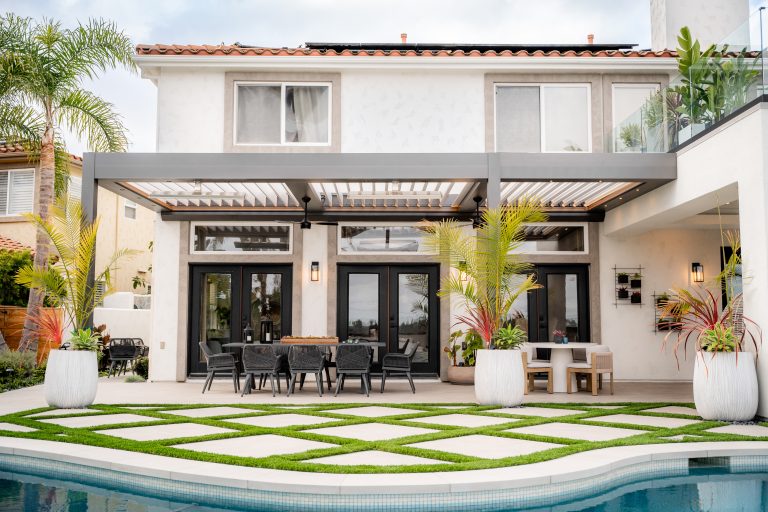
- Do guests need adjustable light levels? A louvered pergola with motorized slats lets you open up on mild days and shut down during a Texas afternoon sun blast — all with a remote or app.
- Is the space attached to the building or freestanding? Rooftop decks, courtyard areas, and parking-adjacent spaces each have different engineering requirements.
- What are the HOA, city, or property restrictions? Commercial installations in DFW often require permits and may need engineer-stamped drawings. Cabana Theory handles the structural design side; your property team handles local permitting.
2. Match the Structure to the Exposure
Texas weather is the toughest test any shade structure can face. North Texas sees sustained winds over 40 mph several times per year. Central Texas gets brutal UV and summer temperatures that routinely exceed 100°F. Southern Oklahoma adds its own set of severe weather considerations.
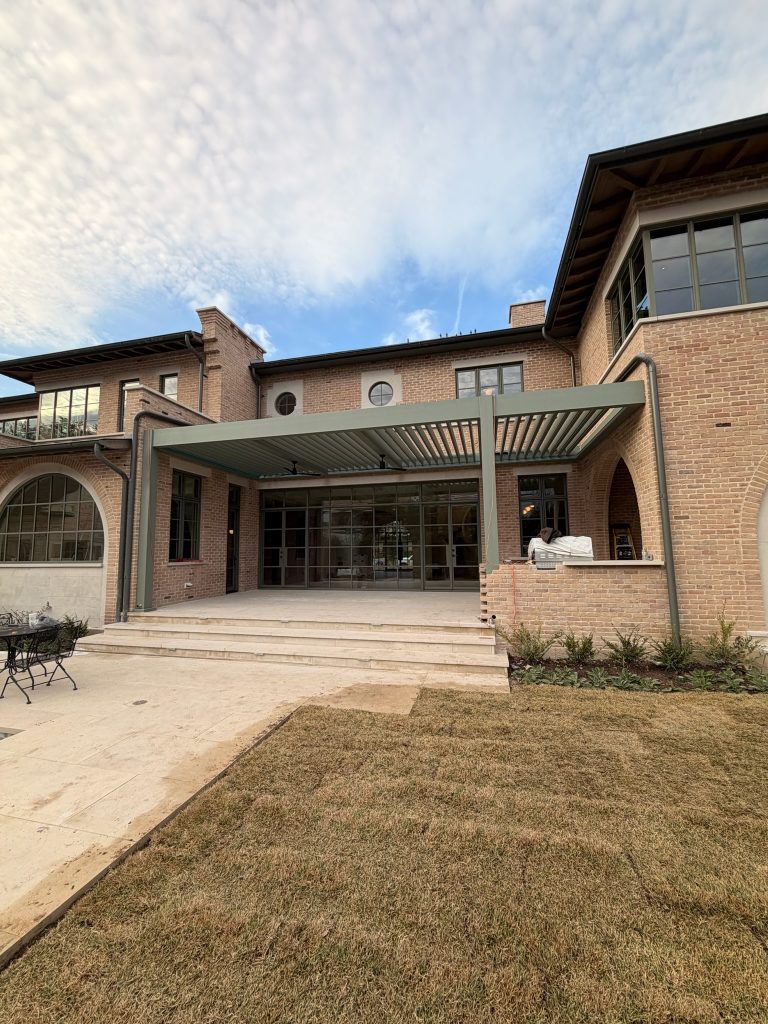
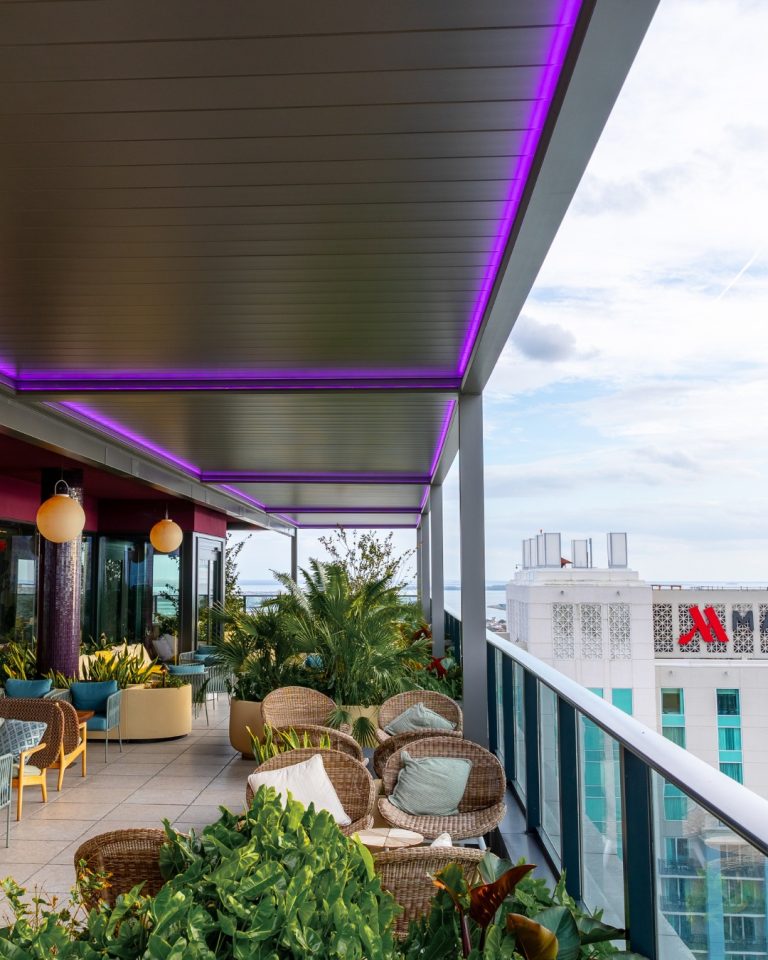
For maximum durability and all-weather performance, a fully enclosed motorized louvered pergola or a solid-roof patio cover is the commercial standard. Aluminum frames rated for high-wind conditions, powder-coated finishes, and UV-stabilized panels are non-negotiable in this climate. Cabana Theory’s commercial aluminum structures are engineered for the Texas environment.
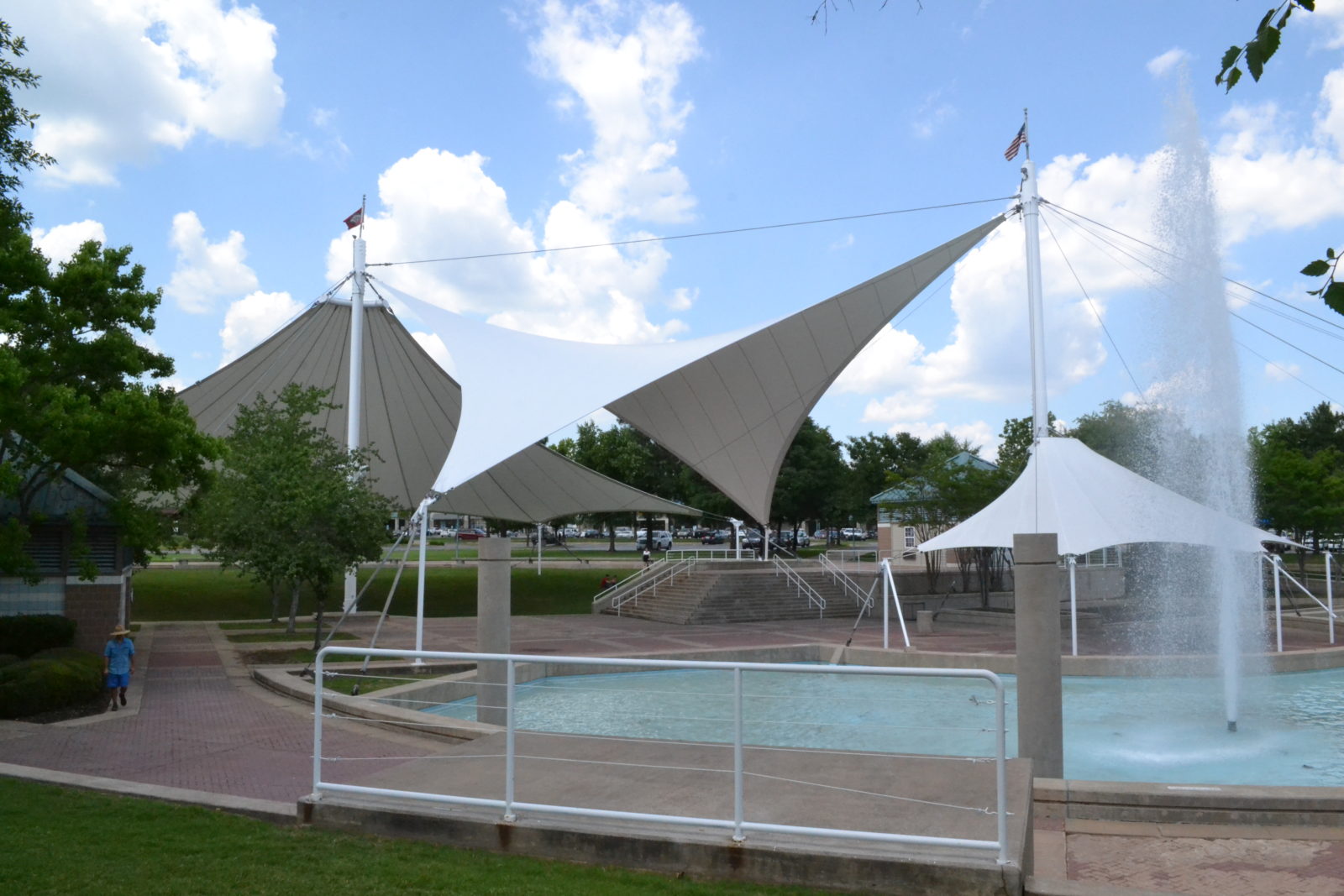
For large open areas — plazas, poolside lounges, athletic courts — tensile sail shade systems provide wide coverage with minimal visual footprint. These work well where a traditional roof structure isn’t feasible or doesn’t fit the architecture.
3. Think About Maintenance Reality
Commercial spaces have higher traffic, more exposure, and less tolerance for downtime. The structure you choose should be able to go years without significant maintenance needs.
Aluminum is the clear winner here. Unlike wood (which requires annual sealing, sanding, or painting) or vinyl (which can crack in extreme heat), aluminum structural systems are essentially maintenance-free. Powder-coated aluminum doesn’t rust, fade, or warp — meaning the structure looks as good five years in as it did at installation.
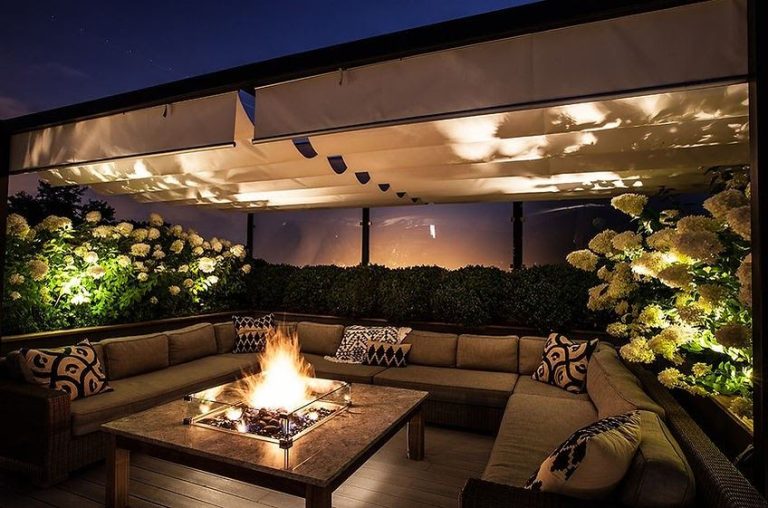
Fabric panels and tensile membranes do require periodic inspection and eventual replacement, so factor that lifecycle into your decision when comparing options.
4. Consider the Guest Experience
A shade structure at a hotel or restaurant is part of the experience your guests will remember. That means:
- Aesthetics matter. Clean lines, consistent color, and proper scale relative to the building all affect how the space feels. Cabana Theory designs commercial structures to complement your existing architecture — not fight it.
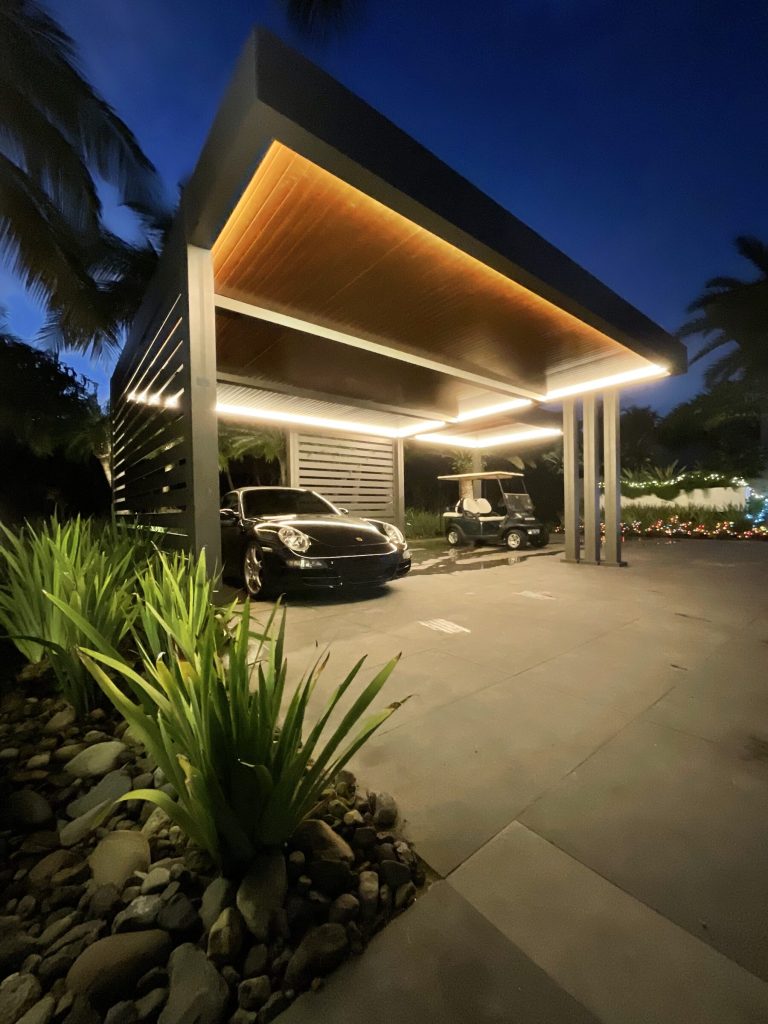
- Comfort features can be built in. LED lighting, misting systems, heaters, and motorized screens can all be integrated into the structure during installation, rather than retrofitted later.
- Accessibility and egress. Commercial spaces must allow clear traffic flow. Freestanding structures with thoughtful post placement keep pathways open.
5. Choose a Contractor Who Understands Commercial Work
Residential pergola companies don’t always have the engineering depth for commercial projects. Commercial shade structures often require:
- Load calculations and engineer-stamped drawings
- Coordination with the property’s structural team
- Phased installation that doesn’t shut down operations
- Compliance with ADA clearance standards
Cabana Theory has installed commercial shade structures for restaurants, resorts, apartment communities, and municipal spaces across DFW and Austin. We’re comfortable working from architect-provided drawings and can submit designs for permit review. Visit our commercial services page to see examples of what we do.
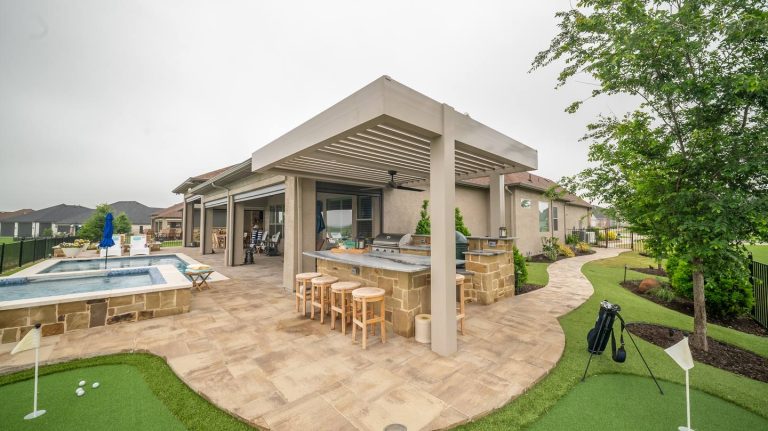
Looking at a solid-roof option for a covered outdoor bar or kitchen? The contemporary patio cover is a popular commercial choice — it delivers a clean, modern look with full weather protection and zero maintenance.
Quick Reference: Commercial Shade Structure Comparison
| Structure Type | Best For | Rain/Wind Protection | Adjustable |
|---|---|---|---|
| Motorized Louvered Pergola | Restaurants, hotels, residences | Yes — when closed | Yes — motorized slats |
| Solid Patio Cover / Pergola | Full-coverage outdoor kitchens, bars | Yes — full coverage | No — fixed roof |
| Sail Shade System | Pools, plazas, large open areas | Solar only (no rain block) | Seasonal installation |
| Commercial Shade Umbrella | Café tables, pool decks, event areas | Solar + light rain | Yes — manual or auto-tilt |
Frequently Asked Questions
Does Cabana Theory install commercial shade structures in DFW and Austin?
Yes. We serve commercial clients across the DFW Metroplex and Austin area, including restaurants, hospitality venues, multi-family communities, and municipal properties. We can also install sail shade systems and shade umbrellas nationally for qualifying commercial projects.
Do commercial shade structures in Texas require permits?
Most permanent commercial shade structures require a building permit and, in many cases, engineer-stamped drawings. Requirements vary by city and structure type. Cabana Theory can provide structural design documentation to support your permit application — reach out to discuss your project’s specifics.
How long does a commercial shade structure installation take?
Timeline varies by structure size and complexity. Smaller installations (a covered patio or a set of shade sails) can often be completed in one to three days once materials are on-site. Larger custom structures with footings, electrical integration, or phased installs take longer. We work with your operations team to minimize disruption.
What’s the most durable shade structure option for a Texas restaurant patio?
For an all-weather, year-round commercial patio, a motorized louvered pergola or solid aluminum patio cover is the top choice. Powder-coated aluminum frames are maintenance-free and handle Texas heat, wind, and UV without cracking, rusting, or fading. Many of our commercial clients pair the structure with motorized screens for full enclosure during rain.
Can shading accessories like lights and heaters be added to a commercial structure?
Absolutely. LED lighting, outdoor heaters, misting systems, and motorized privacy screens can all be integrated at installation. Planning them in from the start is significantly easier and cleaner than retrofitting — so bring up your full wish list early in the design conversation.
Ready to Cover Your Commercial Patio?
Tell us about your space and we’ll help you choose the right structure for your DFW or Austin property.
Get a Free Quote