From Summer to Fall: Transitioning Your Outdoor Living Space in North Texas
North Texas doesn’t give you a slow fade from summer into fall — the heat holds through September, then almost overnight it’s sweater weather. If your outdoor space was built around shade and cooling air movement, a few intentional adjustments can make it just as enjoyable from October through December. Transitioning your outdoor living space in North Texas doesn’t mean starting over. It means layering in warmth, rethinking your textiles, and making sure your structure is doing the right job for the season.
The good news: if you built around a quality aluminum shade structure — whether that’s a fixed slat pergola or a solid roof patio cover — the bones of your outdoor room are already there. The transition is mostly about what you bring in, not what you tear down.
Start With Your Shade Structure
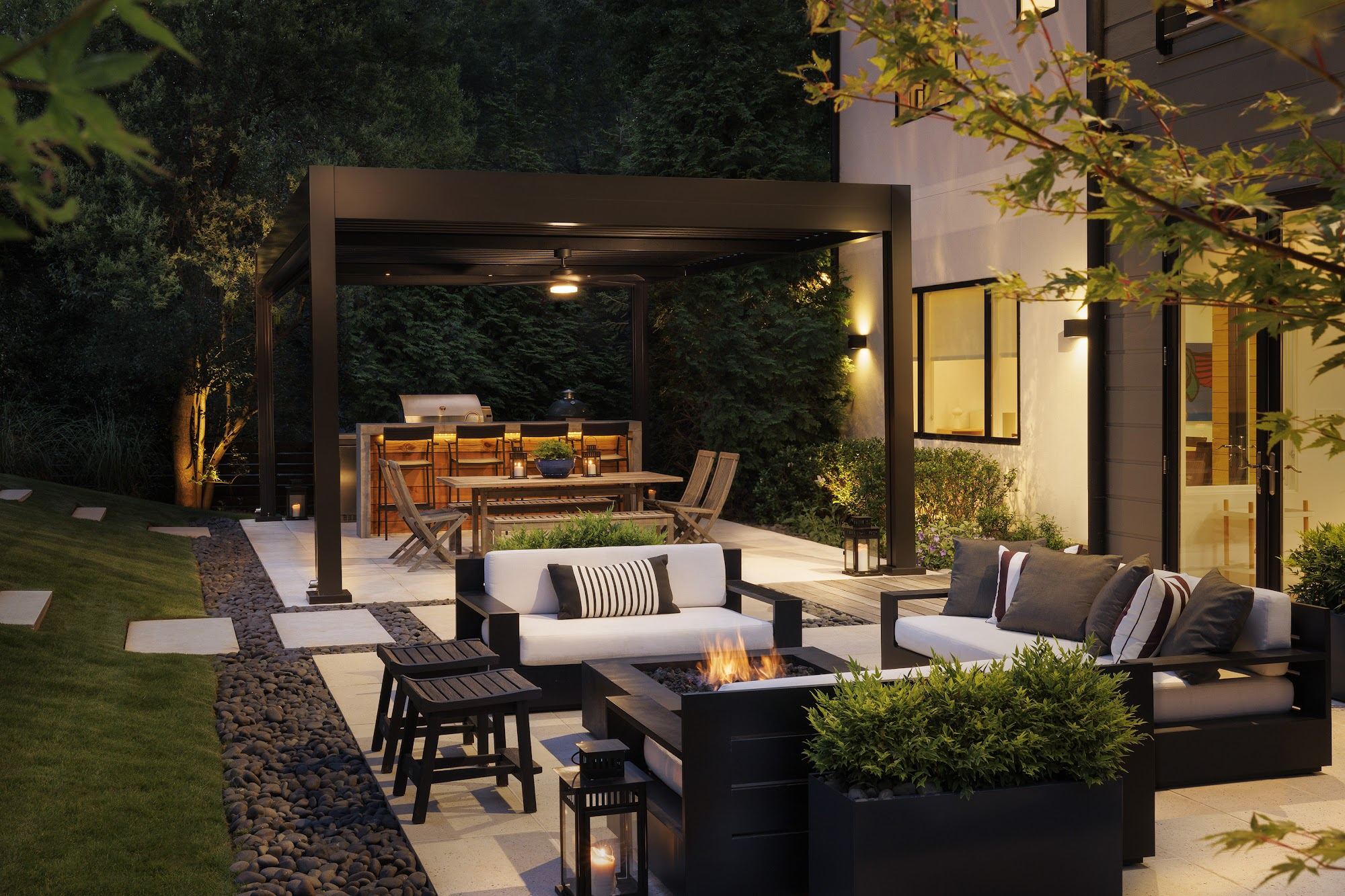
Your pergola or patio cover frames everything else. In summer, you were relying on it to block midday sun and create airflow. As temperatures drop into the 50s and 60s, the same structure becomes the ceiling of your fall outdoor room — and the context that makes all your other decisions easier.
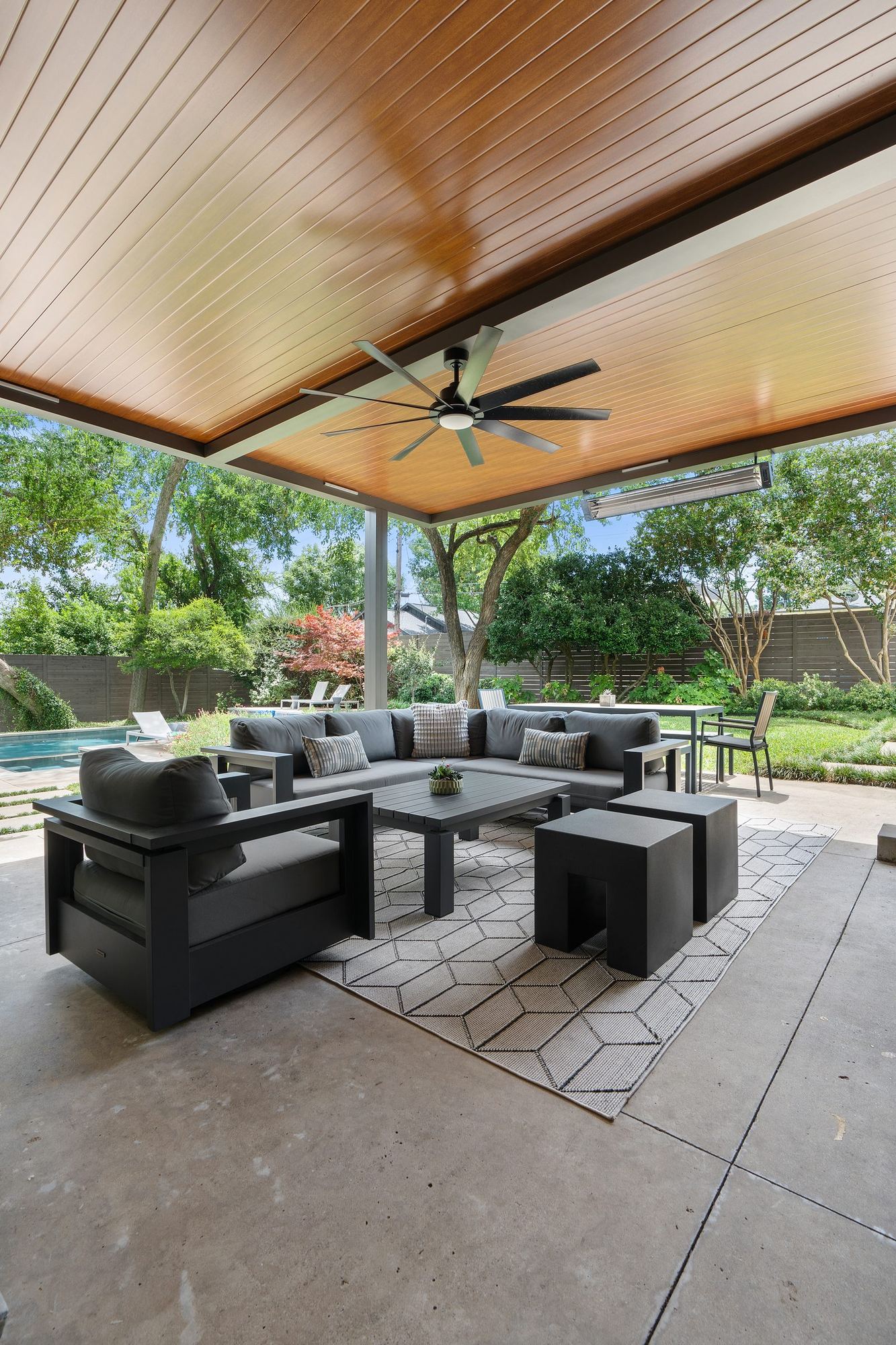
- ✦ Fixed slat pergola: Open slat design lets in fall sunshine at lower sun angles — the exact opposite of why you wanted shade all summer. You get warmth in the morning and filtered light through the afternoon.
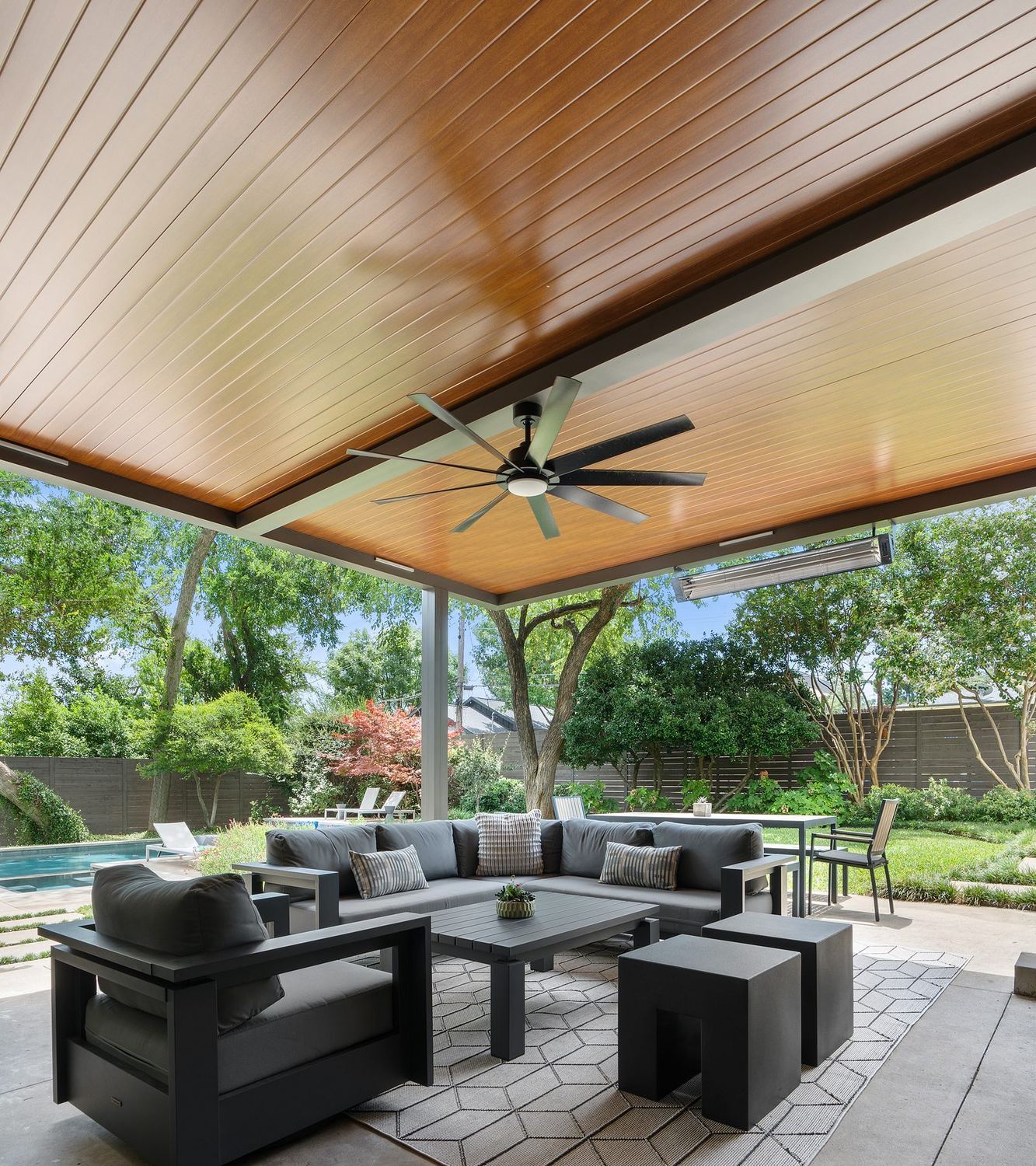
- ✦ Solid roof patio cover: Creates a fully protected outdoor room. Pair with side panels or screens for a cozy enclosed feel when temps drop into the 40s.
- ✦ Motorized louvers: If you have an adjustable louvered system, tilt the blades to let more sun through during the day and close them against cold fronts.
- ✦ Ceiling fans: Keep them running in reverse (clockwise) to push warm air down — they work just as hard in October as they do in July.
Add Warmth — and Use It
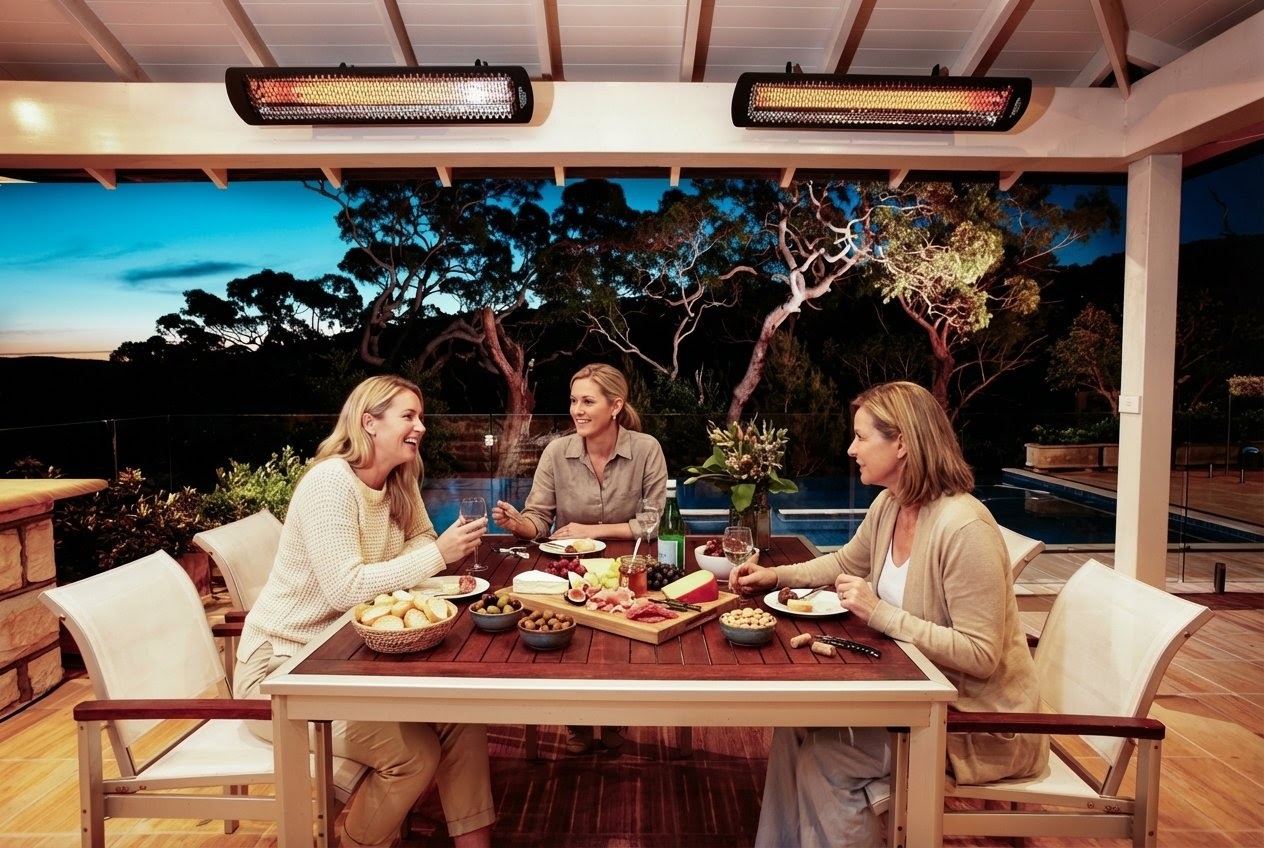
This is the step most North Texas homeowners skip: they swap out the cushions and call it done. But real fall outdoor living in DFW means you’re outside when it’s 45°F and you want to be comfortable. That requires heat — not just the idea of it. Well-positioned patio heaters are the single biggest upgrade you can make for fall and winter usability.
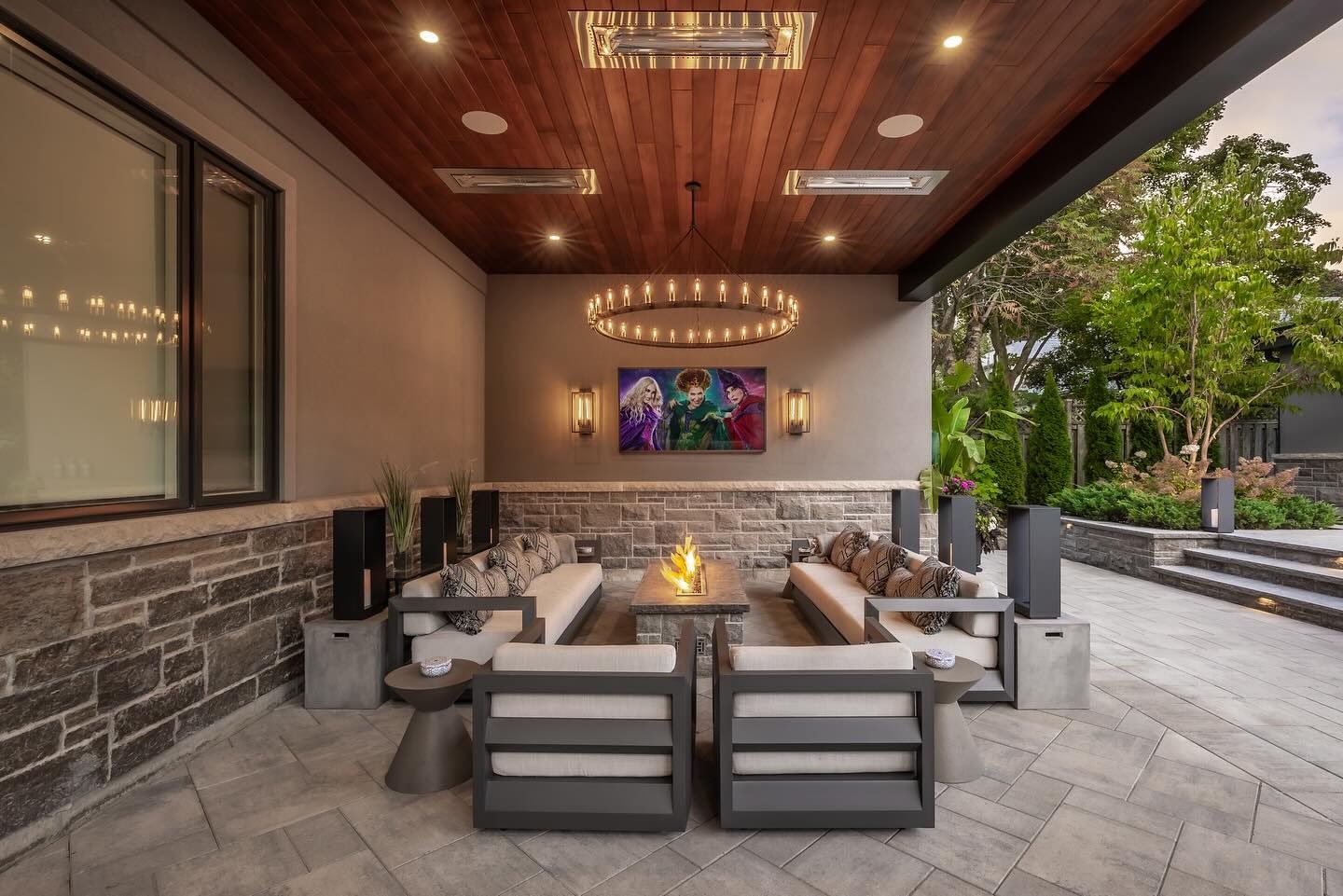
- ✦ Ceiling-mounted heaters are the cleanest option under a covered patio — they mount directly to the structure, stay out of traffic flow, and radiate heat downward where people actually sit.
- ✦ Propane and natural gas options both work well in DFW. If your patio has an existing gas line, a plumber can extend it — worth the investment if you plan to be outside November through February.
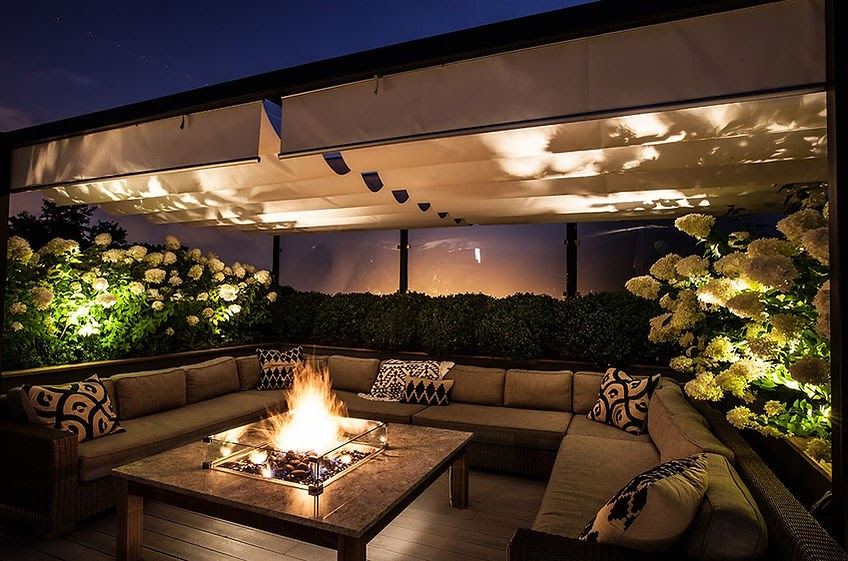
- ✦ Outdoor fire tables add warmth and ambiance but don’t heat a space as efficiently as radiant heaters — combine both for the best result.
- ✦ Placement matters: A heater positioned over your seating zone is worth three times as much as one at the edge of the patio.
Textiles, Furniture, and the Fall Layer
Summer outdoor living tends toward bare surfaces and light fabrics — you’re trying to stay cool. Fall is the opposite. This is the time to bring in texture: layered throw blankets, heavier outdoor cushions, a weather-resistant rug under the seating arrangement. The goal is to make the space feel like an extension of the interior rather than a place you visit on hot days.
- ✦ Tighten the seating arrangement. Summer layouts spread people out. Fall layouts draw them in — around a fire table, closer to the heater, in a configuration that feels intimate rather than open.
- ✦ Add a rug. Concrete and stone hold cold. An outdoor rug under your seating area makes the space feel warmer even before anyone turns on the heater.
- ✦ Swap cushion covers. Deep oranges, burgundy, forest green — fall palettes look intentional outdoors in a way they don’t against summer greenery.
- ✦ Side curtains or panels on a pergola or patio cover create wind protection without permanent walls — install on the northwest side, where DFW cold fronts typically arrive.
Lighting Makes the Difference After 6pm
Fall sunsets in DFW come earlier — by mid-November, it’s dark before dinner. If your outdoor space relies on ambient light from inside the house or a single overhead fixture, it will feel abandoned once the sun goes down. Good outdoor lighting is what separates a patio that gets used three seasons from one that shuts down in October.
- ✦ Warm white LEDs built into or hung from your pergola structure create a completely different atmosphere than overhead can lights — softer, more residential, easier to stay out in.
- ✦ Dimmable systems let you dial in the right level — bright enough to see dinner, dim enough for conversation later in the evening.
- ✦ Path lighting and step lighting around the patio edge extends usable hours and adds safety as nights get longer.
- ✦ String lights vs. integrated: String lights are fast and inexpensive. Integrated LED systems installed in the structure look cleaner and last decades — worth planning into a new build.
What to Plan Now for Next Year
If your outdoor space feels like it’s fighting the transition — if you’re constantly working around weather instead of working with it — the structural layer is probably the issue. A well-designed shade structure in North Texas isn’t just a summer amenity. It’s the reason you can be outside in February. Fall is actually the best time to plan a new pergola or patio cover: most North Texas installers schedule winter builds at a steadier pace, permitting timelines are shorter, and you’re ready to use the space when spring hits.
Whether you’re considering a fixed slat pergola for year-round filtered shade, a solid roof patio cover for full weather protection, or adding heating and lighting to an existing structure, the Cabana Theory team works with homeowners throughout DFW and Austin to design outdoor spaces built for all four seasons.
Frequently Asked Questions
When is the best time of year to use a pergola in North Texas?
Fall — October through early December — is arguably the best season for a pergola in DFW. Temperatures are mild, humidity drops, and a fixed slat pergola lets in the lower-angle fall sun while still providing overhead structure for lighting, fans, and heaters. Spring is a close second. Summer is tough without heaters — fall is where a well-built structure really earns its keep.
Do I need a covered patio to use my outdoor space in winter in DFW?
You don’t need one, but a covered structure dramatically extends your usable season. A solid roof patio cover keeps rain and wind off the seating area, and ceiling-mounted heaters work far better under cover than in an open yard. Even a fixed slat pergola provides enough overhead structure to mount heaters and lighting, which makes a significant difference in comfort from October through February.
What kind of patio heaters work best under a covered patio in North Texas?
Ceiling-mounted infrared or radiant heaters are the most effective option — they mount to the structure overhead and direct heat downward into the seating zone. For patios with existing natural gas service, a direct gas connection is the most cost-effective long-term choice. Electric heaters work well for occasional use without the installation overhead.
Is fall a good time to install a new patio cover or pergola in DFW?
Yes — fall and early winter are ideal installation windows in North Texas. Demand is lower than spring and summer, scheduling is easier, and lead times are shorter. Installation crews work in comfortable temperatures without summer heat delays. A pergola installed in October or November is ready for spring entertaining season well ahead of the rush.
Does Cabana Theory serve Austin as well as DFW for patio structures?
Yes. Cabana Theory serves the Dallas-Fort Worth metroplex and the Austin metro area. If you’re planning an outdoor structure for this fall or for the spring season, request a free estimate and we’ll schedule a site consultation at your convenience.
READY TO USE YOUR OUTDOOR SPACE ALL YEAR?
Cabana Theory designs and installs shade structures, patio covers, heaters, and lighting for DFW and Austin homeowners.
REQUEST A FREE ESTIMATE EXPLORE PERGOLA OPTIONS